
- Use the highest washer spin speed the care label and machine allow.
- Shake garments out before hanging them.
- Leave gaps so air can move around each item.
- Put heavier items at the outer edges of the rack.
- Turn thick waistbands, pockets, and cuffs partway through drying.
- Improve ventilation; do not crowd damp laundry into a closed room.
ENERGY STAR recommends a drying rack or outdoor line where practical and notes that a higher washer spin speed can reduce remaining moisture. Fabric labels and appliance instructions still take priority.
Choose the drying position by fabric
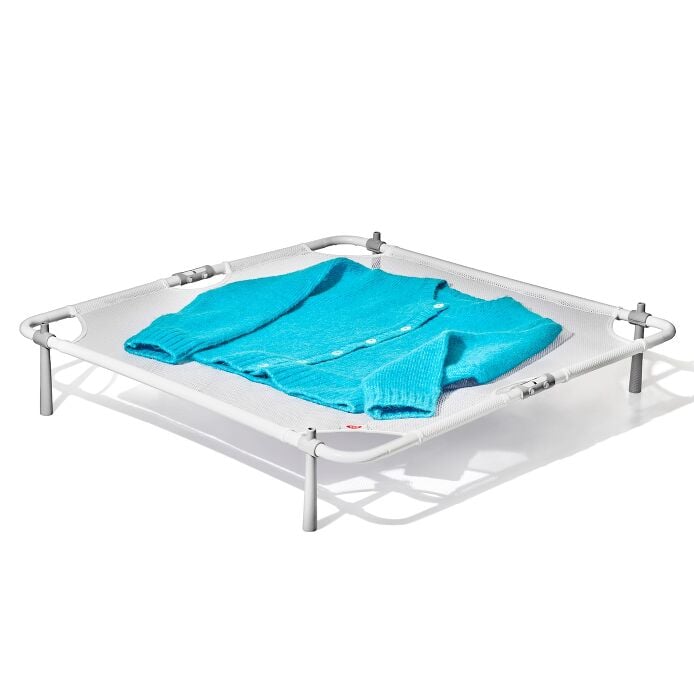
Hang shirts, pants, towels, and lightweight synthetics with enough separation to keep wet surfaces from touching. Lay sweaters and other items that can stretch flat when their care labels call for flat drying. Delicates may need shade and lower heat exposure. Never assume every garment can be hung from the shoulders or placed near a heater.
For flat drying, the OXO Good Grips Folding Sweater Dryer review explains the raised mesh format and its space requirements. It is useful only if you have a stable surface and somewhere to store it afterward.
Make a small room work harder
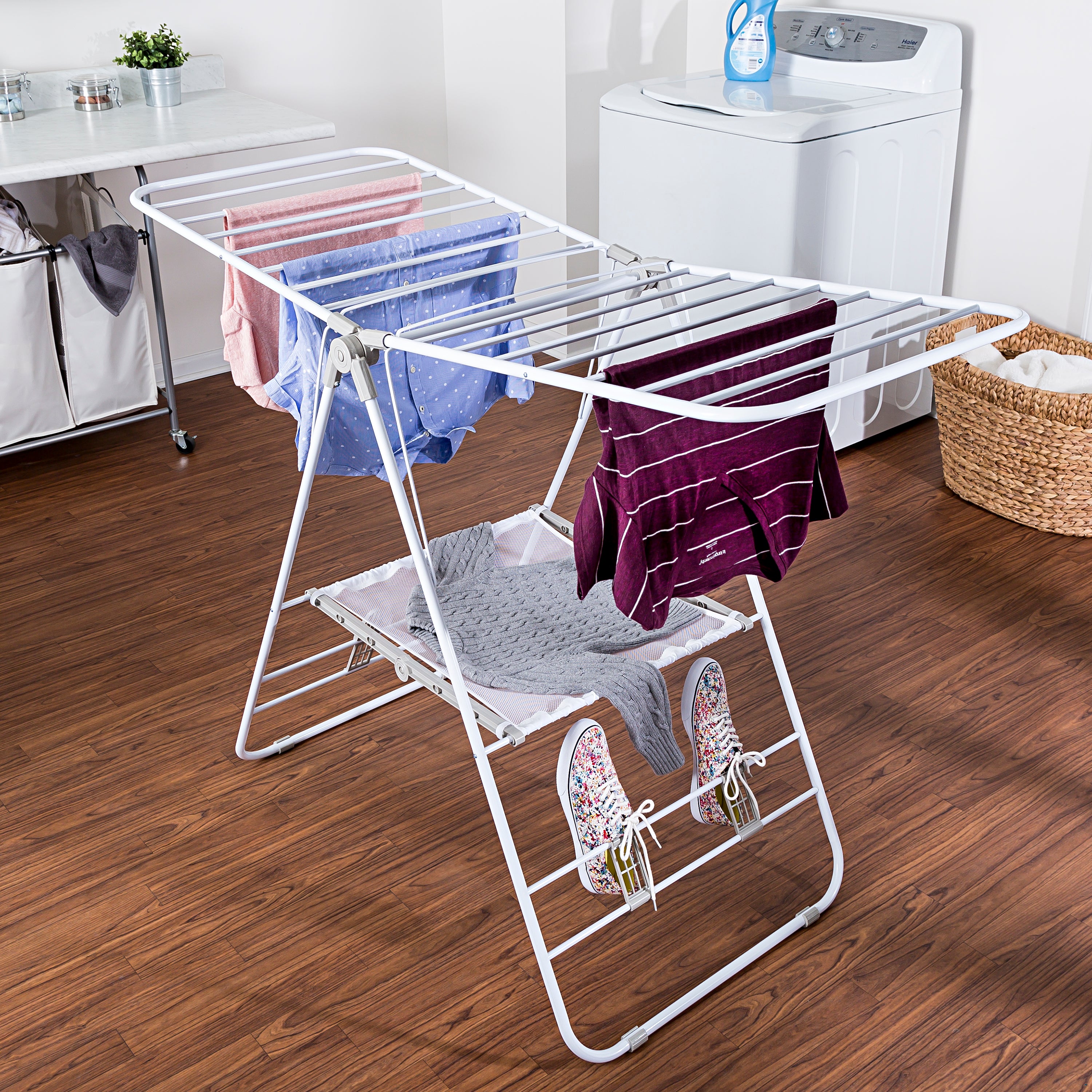
Place the rack where moving air can reach both sides. If weather and security permit, briefly opening a window can help exchange humid indoor air. A room fan may improve circulation, but keep electricity and fan placement away from dripping laundry. Do not block exits, heaters, vents, or walkways.
A freestanding rack offers more capacity but takes floor space. Our Honey-Can-Do Gullwing Drying Rack review covers its footprint, drying space and storage trade-offs. Travelers or households drying only a few light items may prefer the Sea to Summit Lite Line Clothesline, provided there are safe anchor points.
Prevent slow-drying trouble
- Do not overlap towels or fold thick items over several bars without turning them.
- Empty pockets and open zippers so hidden layers can dry.
- Wipe the rack before loading clean laundry.
- Protect water-sensitive flooring from drips.
- If the room stays humid or condensation appears, reduce the load and improve ventilation.
Do you need to buy a rack?
Not necessarily. Hangers on an existing rail, a clean shower rod rated for the load, or a securely installed line may be enough for a small wash. A rack becomes useful when you need predictable spacing, flat-drying support, or more capacity without using doors and furniture.
Drying time changes with fabric thickness, room temperature, humidity, airflow, washer extraction, and load size. There is no honest universal drying-time promise.