
- Empty the entire container zone.
- Match every container with its correct lid.
- Set aside cracked, warped, badly stained, or orphaned pieces.
- Group by shape and size rather than brand color.
- Nest only as deeply as you can undo without unpacking the cabinet.
- Store lids vertically when that makes each size visible.
Match first, organize second
Lay containers out with their lids attached or directly beneath them. This exposes duplicates and orphans immediately. Do not keep a lid because it might fit something later. If a container is damaged or no longer closes correctly, follow local disposal or recycling rules for that material.
Choose a layout for the space you actually have
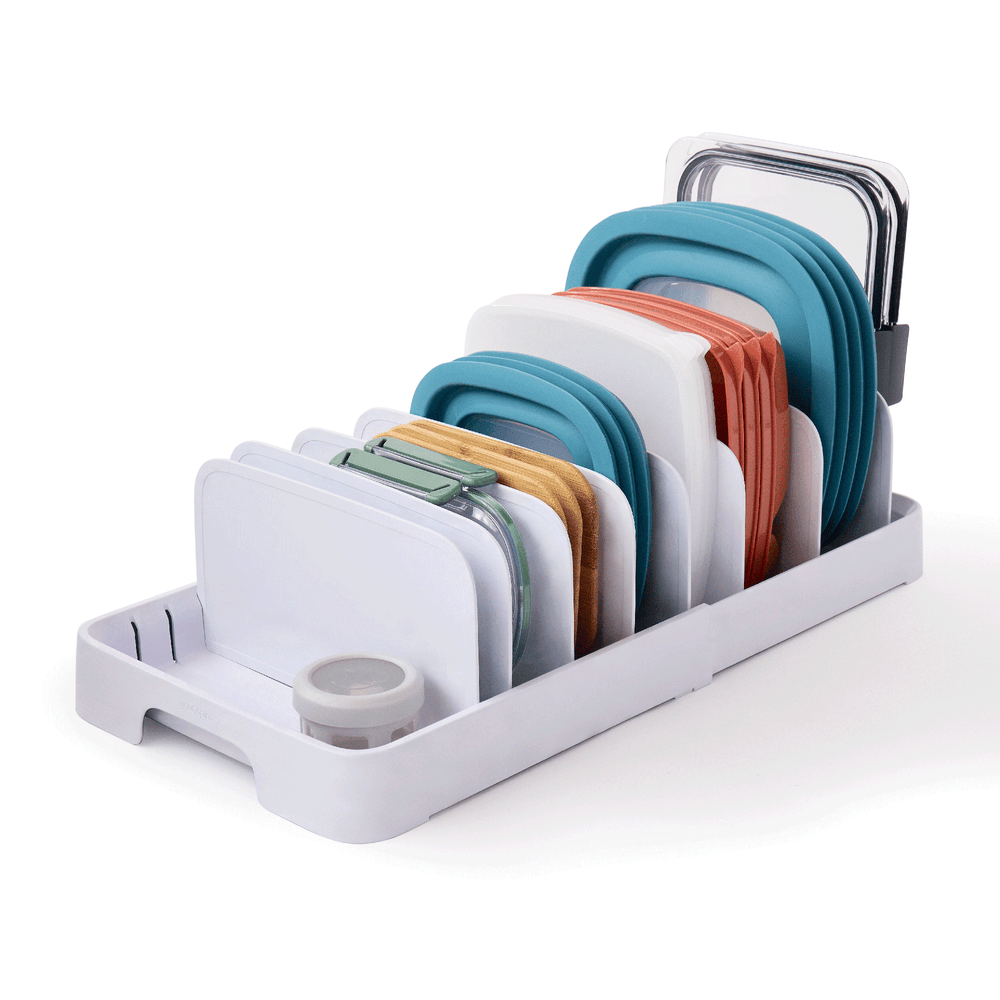
In a deep cabinet, shallow stacks at the front and larger containers at the back can work if every stack remains reachable. In a drawer, low vertical lid storage may be easier than tall nested piles. Measure interior width, depth, and height, including hinges and shelf lips.
The YouCopia StoraLid review covers an adjustable vertical-lid system. It may make sizes easier to see, but it consumes a fixed footprint and cannot compensate for keeping too many mismatched pieces.
Keep rigid containers and reusable bags separate
Reusable bags collapse, while rigid containers stack. Mixing them in one pile makes both harder to retrieve. A simple existing bin may be enough for bags. If you want a divided holder, the YouCopia StoraBag review explains its four-slot format and cabinet-space trade-off.
For the storage pieces themselves, compare the closure and stacking details in the Rubbermaid Brilliance review, Stasher Sandwich Bag review, and Zip Top Dish Set review. These are different formats, not interchangeable recommendations.
Try a no-purchase setup
- Use a clean shoebox or existing bin to hold lids vertically for one week.
- Put the most-used sizes at the front.
- Limit each nested stack to pieces that release easily.
- Label the temporary zones only after the arrangement works.
- Photograph the finished layout so everyone can restore it.
Avoid the common mistakes
- Buying an organizer before measuring the cabinet.
- Keeping orphaned lids and duplicate sizes indefinitely.
- Nesting so deeply that the bottom container is never used.
- Stacking lids flat where every retrieval disturbs the pile.
- Mixing food-storage pieces with unrelated drinkware and bakeware.
The best system is the one household members can restore without unpacking the cabinet. An organizer is useful only when it makes the remaining pieces easier to see and return.