
Research checked October 21, 2026. Research-based, not hands-on tested. Linked product reviews contain affiliate links. Affiliate disclosure and image credits.
The short answer
Choose ordinary airtight containers for a simple close-and-store routine. Consider a vacuum system if removing air is a feature you will actually use and you are willing to keep its pump, valve and seals maintained. Neither type cancels normal food-storage requirements.
Closing a lid is not the same as extracting air
Rubbermaid's Brilliance 9.6-cup two-pack uses latches and an airtight seal. The manufacturer identifies the containers as Tritan plastic, stackable, freezer-safe and top-rack dishwasher-safe. It also specifies microwave venting with the latches open. Follow the exact model's directions rather than applying glass-container rules to this plastic version. Rubbermaid model 2108407.
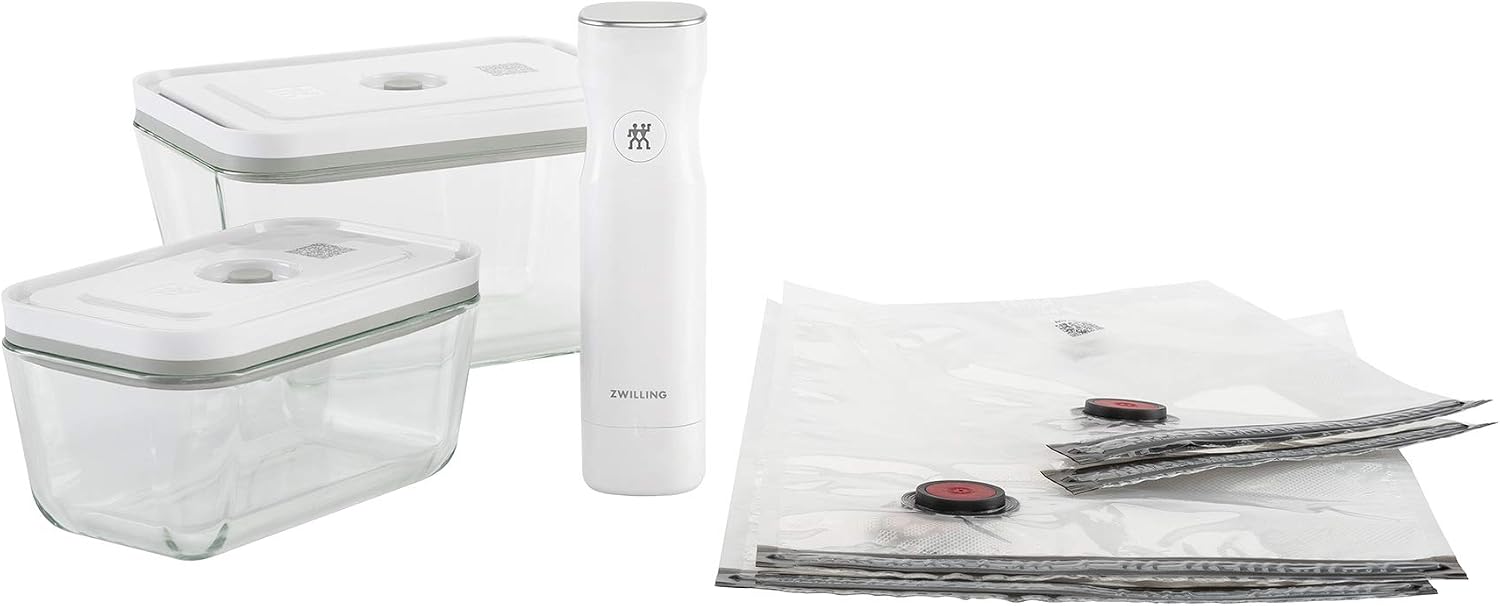
Zwilling's Fresh & Save system adds a pump that extracts air. Its FAQ says storage life depends on the food's starting condition, preparation hygiene and correct cooling/storage. It also explains that the lid indicates vacuum condition and may need the vacuum refreshed. That makes repeated opening a practical consideration: a container opened several times a day asks you to repeat more steps than a latch-only box. Zwilling FAQ.
Choose for the way you actually eat
If the container holds lunch that will be eaten shortly, convenience, leak resistance and usable shape may matter more to you than adding a pump. If you routinely store portions and are willing to reseal them, vacuum is a feature worth comparing. These are workflow judgments, not a promise of a fixed number of extra fresh days or reduced grocery bills.
Buy the complete system you need
Check whether the listing contains the pump or only replacement containers. Read the capacity of each actual vessel; a seven-piece set does not necessarily mean seven containers. Check material, lid care, freezer and microwave instructions separately. A glass base does not make its lid oven-safe. Leave room to place the pump on the valve, and check whether replacement lids or seals are available for the exact line.
Keep food handling separate from marketing
Zwilling explicitly states that vacuum sealing does not replace proper cooling, freezing or storage. Its app estimates are guidelines, not guarantees. We therefore do not turn a manufacturer's freshness multiplier into a universal shelf-life recommendation. Use appropriate food-safety guidance for the food itself; do not use smell or a vacuum indicator as proof that a meal is safe.
See our Zwilling glass starter-set review and Rubbermaid Brilliance review. This is a feature-and-workflow comparison, not a controlled storage trial.