
- What must stay within arm's reach every day?
- What can move higher, lower, or outside the kitchen?
- Which items are duplicates or no longer used?
- Which cabinet, drawer, or counter measurement limits the solution?
Drawers: reduce layers and dead space
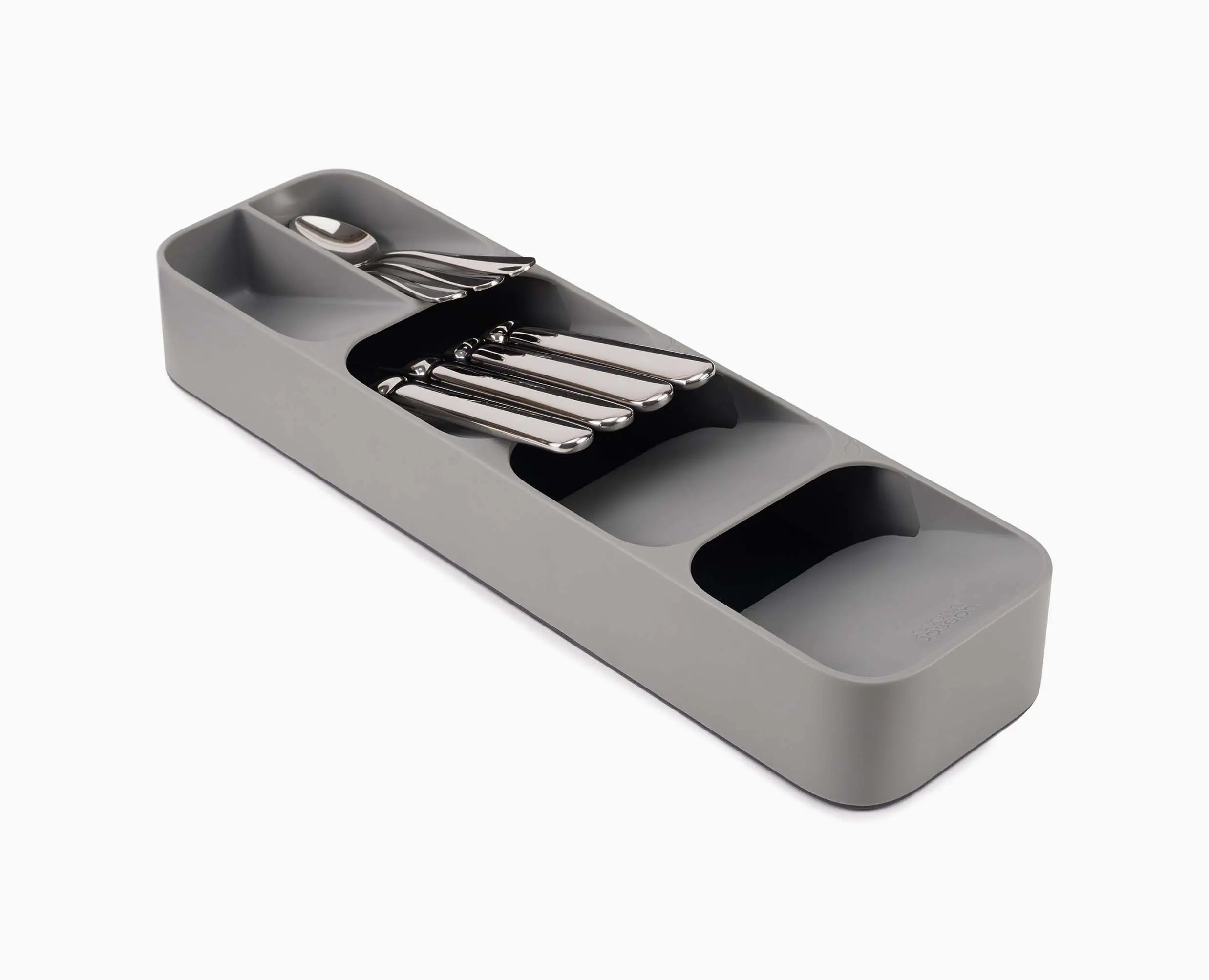
Keep everyday cutlery and tools visible in a single layer when possible. Measure drawer width, depth, and height before choosing an insert; internal hinges and curved sides can reduce usable space.
The Joseph Joseph DrawerStore Compact Cutlery Organizer review covers a stacked layout that can save width but changes how pieces are separated. It is not automatically better for every drawer, especially if the drawer is shallow or household members cannot see the labels.
Cabinets: use height without hiding everything
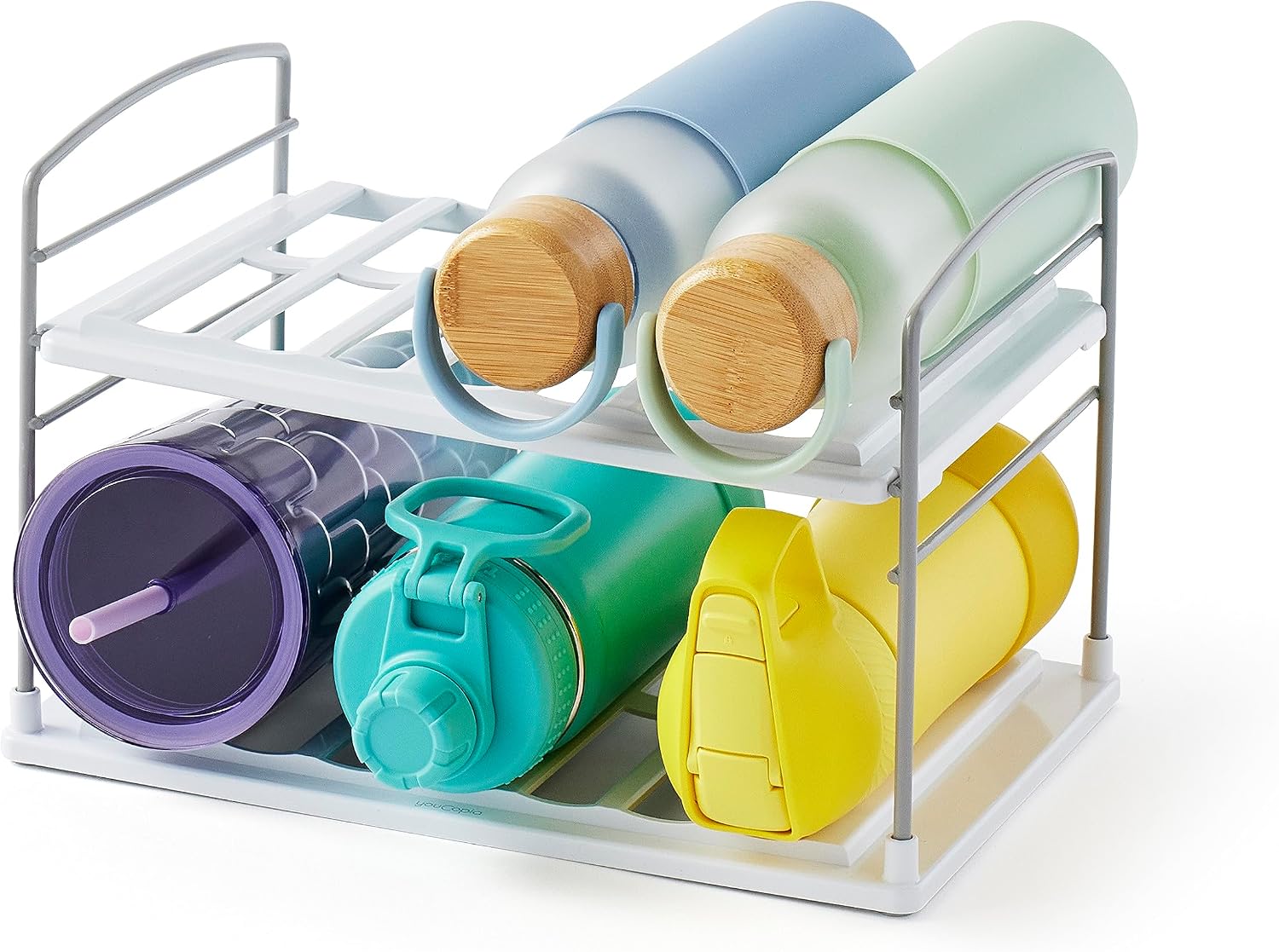
Group items by task, then place less-used pieces above daily essentials. A shelf riser can create a second level, but only when both levels remain visible and reachable. The YouCopia UpSpace Shelf review and Joseph Joseph CupboardStore review illustrate different ways to use vertical cabinet space. Check dimensions, shelf loading, adhesive requirements, and door clearance first.
Food-storage containers: match before you stack
Pair every container with its lid. Remove damaged pieces and avoid keeping orphaned lids indefinitely. Store lids vertically when that makes sizes easier to see. The separate food-container organization guide gives the full reset process.
Counters: keep only active tools
Countertop space is working space. Move occasional appliances and backup supplies elsewhere. A narrow rolling cart such as the Yamazaki Tower Slim Rolling Cart may use a gap efficiently, but only after checking baseboards, handles, wheel clearance, and the cart's loaded width.
Try a no-purchase reset
- Put duplicates together and keep the best example.
- Move seasonal and entertaining pieces out of prime space.
- Use existing boxes as temporary category bins for one week.
- Label shelves only after the arrangement proves useful.
- Photograph the finished cabinet so everyone can restore it.
An organizer cannot create usable room if it blocks a door, hides the back row, or adds another layer to unpack. The right choice depends on exact cabinet dimensions, reach, mobility, household habits, and the number of people using the kitchen.